
Water dripping behind gutters can be frustrating, especially when rainwater starts running down your siding or collecting near your home’s foundation. However, water appearing between the gutter and the house does not automatically mean the entire gutter system needs replacing.
For homeowners in Anderson, South Carolina, the first step is identifying where the water originates. Clogged gutters, loose attachments, improper positioning, and roof-edge concerns can all produce similar symptoms.
Understanding these potential causes can help you recognize warning signs, document the problem, and determine when professional gutter cleaning or repairs may be necessary.
Below are four practical checks to help you understand why water may be dripping behind your gutters.
Why Is Water Dripping Behind Gutters?
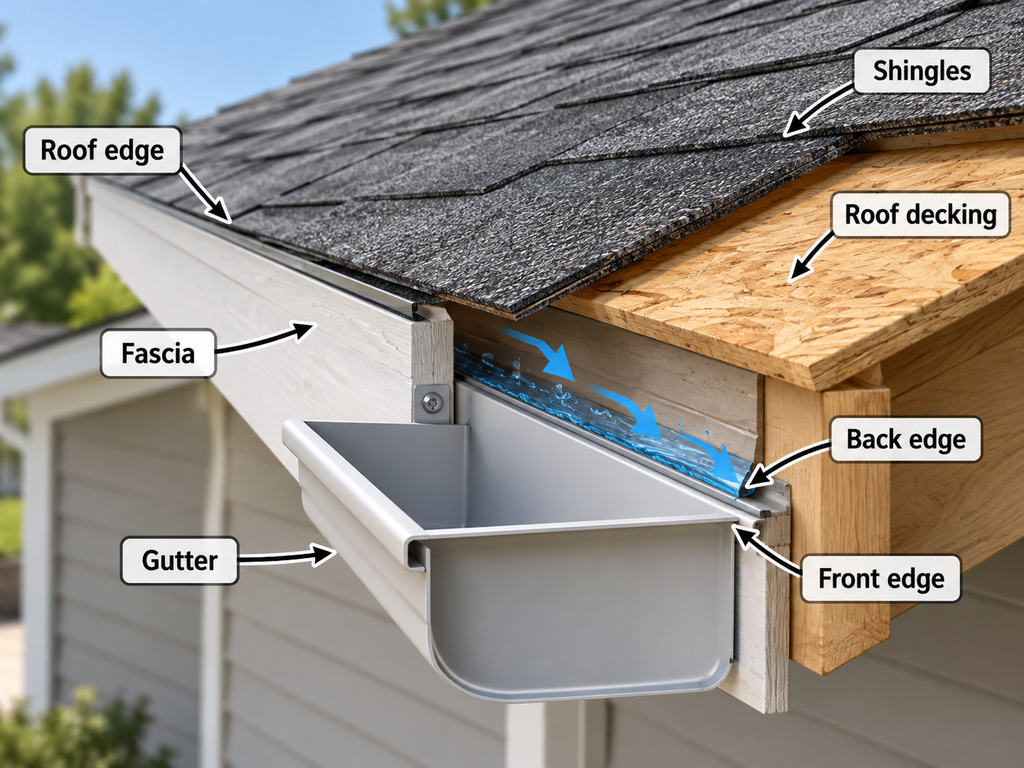
Water dripping behind gutters generally indicates that rainwater is escaping its intended drainage path. Instead of flowing from the roof into the gutter and through the downspout, some water may travel along the back of the gutter, fascia, or exterior wall.
Several conditions can contribute to this problem:
- Clogged gutters: Leaves, pine needles, and other debris restrict water movement and may contribute to overflow.
- Loose gutter attachments: A gutter that has shifted away from its intended position may no longer collect roof runoff correctly.
- Roof-edge problems: The position or condition of roof-edge flashing can affect how water enters the gutter.
- Damaged gutter components: Bent sections, loose connections, or deteriorated mounting surfaces may allow water to escape.
- Improper gutter alignment: An incorrectly positioned or sagging section may contribute to drainage problems.
These conditions can occur individually or together. A professional inspection may be needed to identify the actual source before choosing a repair.
Check 1: Identify Where Water Is Escaping
When investigating water dripping behind gutters, determine whether the water is truly passing between the gutter and the house or escaping from another location.
From a safe ground-level position, observe where the water first becomes visible.
Water overflowing from the front
Water spilling over the front lip may indicate restricted drainage, an overwhelmed gutter, or another issue affecting runoff. Front overflow should not automatically be classified as a leak behind the gutter.
Water dripping from a corner or end cap
A drip beneath a corner or end cap may originate from a connection or joint rather than the roof edge.
Water running behind the gutter
If water appears along the gutter’s back edge and travels down the fascia or siding, the gutter’s position and the roof-edge details deserve closer inspection.
Water running down the exterior wall
Check where the wet area begins. Water can move along building surfaces before dripping, which means the visible wet spot may not directly identify the source.
Safety reminder: Never climb a ladder during rainfall, lean out of a window, or stand beneath a visibly loose gutter. Photographs from a safe location can help a contractor understand the problem.
Check 2: Look for Clogged Gutters and Downspouts
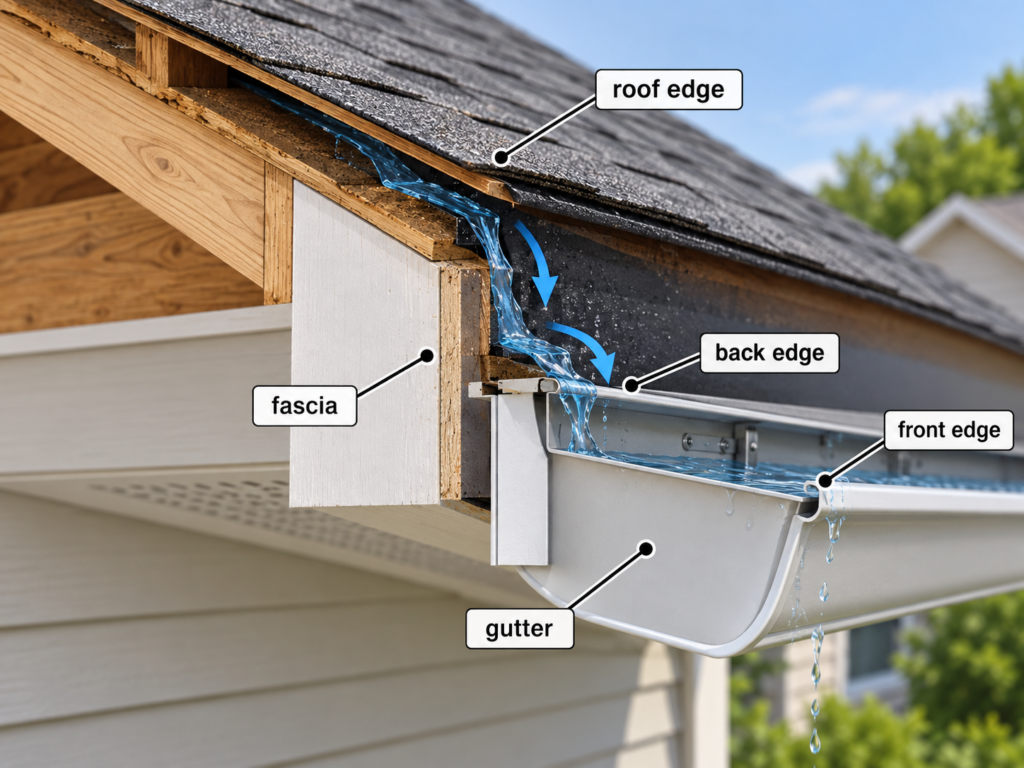
One possible cause of water dripping behind gutters is debris interfering with normal drainage.
Leaves, pine needles, twigs, and other materials can accumulate inside the gutter or downspout. When drainage becomes restricted, water may build up and escape at an unintended location.
For Anderson homeowners with trees near their rooflines, checking for debris is a useful part of routine gutter maintenance.
Signs of possible gutter blockage
Look for these visible indicators:
- Leaves or vegetation extending above the gutter.
- Water overflowing during rainfall.
- Water collecting near a downspout connection.
- An unusually wet area beneath one gutter section.
- Limited downspout discharge during rainfall, although this alone does not establish a blockage.
Avoid reaching into gutters or attempting to remove debris from an unsafe position.
Palmetto State Gutterman provides professional gutter cleaning and repair services, including debris removal and downspout clearing.
Cleaning can help determine whether restricted drainage contributed to the problem. However, if water continues dripping behind gutters after the drainage path has been cleared, attachment or roof-edge concerns may still need evaluation.
Check 3: Inspect for Loose or Misaligned Gutters
A gutter that has moved away from its original mounting position may no longer receive runoff as intended.
Over time, gutter sections can shift, sag, or become damaged. Storms, impacts, and problems with supporting materials may also affect their alignment.
What should homeowners look for?
From the ground, observe the gutter’s overall appearance.
- Does one section appear noticeably lower than another?
- Is there a visible gap between the gutter and fascia?
- Does any portion look twisted, bent, or displaced?
- Did the problem begin after a storm or impact?
- Is water consistently escaping from the same section?
These observations are helpful, but they do not confirm why the gutter moved.
A professional may need to evaluate the mounting points, gutter alignment, and condition of the fascia before recommending repairs.
Can a loose gutter be repaired?
Sometimes, a localized attachment or alignment problem can be repaired without replacing the entire gutter system.
However, the appropriate solution depends on the gutter’s condition and the supporting structure.
Palmetto State Gutterman offers gutter repair and maintenance services, including work addressing storm-related damage.
Do not attempt to push a loose gutter back into place or add fasteners without understanding what caused the movement. Damaged supporting materials may require separate attention.
Check 4: Examine the Roof Edge and Gutter Position
Water dripping behind gutters may also be related to how rainwater travels from the roof into the gutter.
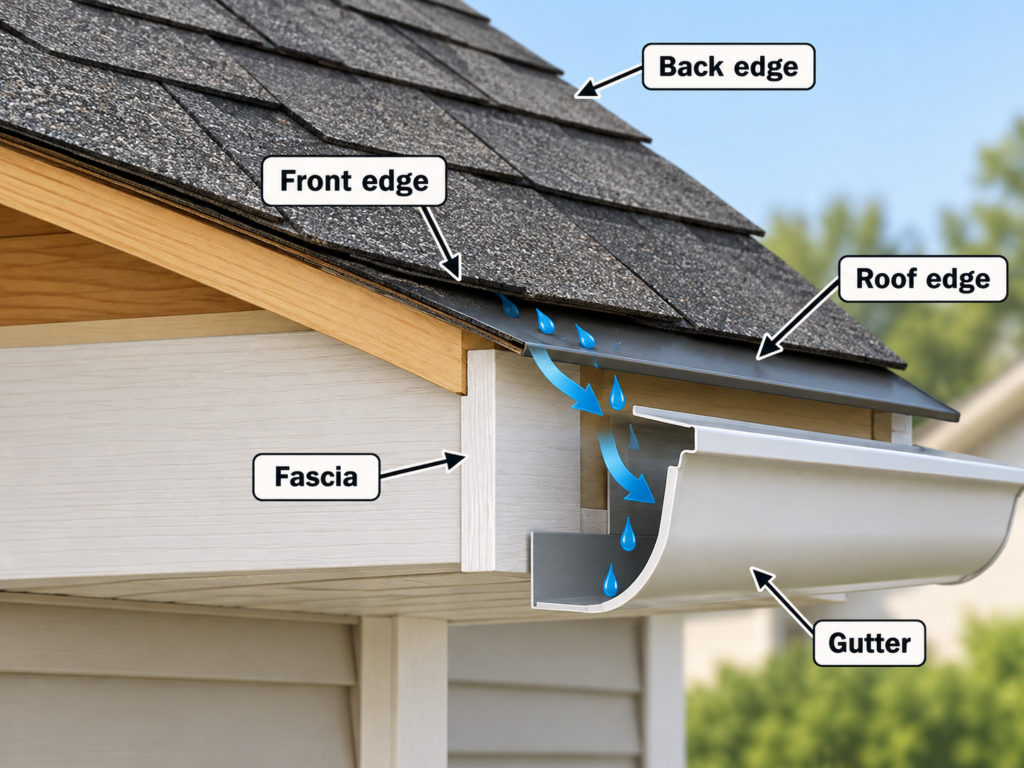
The gutter, roof edge, fascia, and flashing work together to manage runoff. If their relationship is disrupted, water may follow an unintended path.
Could roof-edge flashing be involved?
Roof-edge flashing helps manage water at the edge of a roof assembly. Its position relative to the gutter may affect whether runoff enters the gutter properly.
During an inspection, a contractor may consider:
- Whether the gutter sits appropriately beneath the roof edge.
- Whether roof-edge flashing is present and properly positioned.
- Whether visible flashing or edge materials are damaged.
- Whether the gutter has moved away from its intended location.
- Whether the dripping started after roofing or gutter work.
A problem involving flashing or roofing materials should be evaluated by an appropriately qualified professional.
Avoid lifting shingles, moving flashing, or sealing gaps before the water’s path is understood. Applying sealant without identifying the source may leave the actual problem unresolved.
Why Water Behind Gutters Should Not Be Ignored
Occasional dripping may appear minor, but repeated wetting can indicate that rainwater is not being directed away from the building as intended.
Over time, uncontrolled roof runoff can contribute to moisture problems around exterior surfaces and foundations.
The U.S. Department of Energy’s guidance on gutters, downspouts, and foundation drainage explains why directing roof water away from a building is important for managing foundation moisture.
This does not mean every leaking gutter has already caused damage. It means repeated moisture exposure deserves investigation.
Warning signs worth documenting
- Peeling or deteriorating paint near the roofline.
- Persistent wet streaks along the fascia or siding.
- Dark staining around an affected gutter section.
- Water repeatedly collecting near the same exterior wall.
- A visibly sagging or displaced gutter.
Note whether these conditions appear during every rainfall or only during heavier storms.
If a section appears loose enough to fall, keep people away from the area and arrange an inspection rather than waiting for another rainstorm.
How to Prevent Water Dripping Behind Gutters
Preventive maintenance may help reduce certain drainage-related problems, although it cannot eliminate every possible cause of water escaping behind a gutter.
Keep gutters and downspouts clear
Schedule gutter cleaning when debris accumulation affects drainage. Homes surrounded by trees may need closer attention depending on the amount of falling leaves and pine needles.
Watch for changes after storms
Strong winds, fallen branches, or other impacts may affect gutter components. Check for visible changes from a safe location after severe weather.
Address loose sections promptly
A gutter that appears to have shifted should be assessed before the condition worsens. Securing a gutter without checking its supporting material may not resolve the issue.
Consider professional gutter inspections
An inspection can help distinguish a cleaning need from a repair concern and identify when roofing or fascia work may be outside the gutter contractor’s scope.
Evaluate gutter guards when appropriate
Gutter guards can reduce some debris entering the system, but they do not correct loose attachments or roof-edge problems. They also do not eliminate the need for maintenance.
Palmetto State Gutterman offers gutter guards as part of its residential gutter services.
What to Document Before Calling a Gutter Professional
If water dripping behind gutters occurs intermittently, recording a few details can help make the inspection more productive.
Before contacting a contractor, note:
- Location: Identify the affected side of the house and its nearest downspout, corner, or doorway.
- Timing: Record whether the leak appears during light rainfall, heavy rainfall, or after rain has stopped.
- Appearance: Describe whether water is dripping, overflowing, or running down the siding.
- Recent changes: Mention any storms, impacts, roof repairs, or gutter work.
- Photographs: Capture the affected area and surrounding gutter section from a safe ground-level location.
You do not need to diagnose the problem yourself. These observations simply help identify which areas may require inspection.
Frequently Asked Questions About Water Dripping Behind Gutters
What causes water dripping behind gutters?
Possible causes include clogged drainage paths, loose gutter attachments, incorrect gutter positioning, or problems at the roof edge. The actual cause depends on where the water originates and how it travels along the building.
Can clogged gutters cause water to drip behind them?
Yes, restricted drainage may cause water to build up and escape through unintended paths. However, water behind the gutter can also occur when drainage is clear, so cleaning alone may not resolve every situation.
Can water dripping behind gutters damage a house?
Repeated uncontrolled runoff can contribute to moisture exposure around siding, fascia, and the foundation. The presence of dripping does not establish that damage has occurred, but persistent wetting should be investigated.
Will gutter guards stop water from leaking behind gutters?
Not necessarily. Gutter guards may reduce debris entry, but they cannot correct a shifted gutter, damaged mounting surface, or roof-edge problem. The source of the leak must be identified first.
Do seamless gutters prevent water from getting behind gutters?
Seamless gutters reduce the number of joints along straight gutter runs, but they do not guarantee that water cannot escape behind the system.
Palmetto State Gutterman offers custom seamless gutters fabricated on-site. Proper positioning, attachment, and roof-edge drainage remain important regardless of gutter design.
Should I replace gutters if water is dripping behind them?
Not automatically. A localized issue may require cleaning, adjustment, or targeted repair. Replacement should depend on the gutter system’s overall condition and the findings of an inspection.
When should I call a gutter professional?
Consider arranging an inspection if dripping repeatedly affects the same area, continues after cleaning, or appears alongside a loose or damaged gutter. If the problem involves roofing or deteriorated structural materials, another qualified trade may also be necessary.
Get Professional Gutter Cleaning and Repairs in Anderson, SC
If you notice water dripping behind gutters at your Anderson home, identifying the source is more useful than assuming the whole gutter system needs replacing.
Whether the problem involves debris, loose gutter components, or how runoff enters the gutter, an appropriate inspection can help determine the next step.
Palmetto State Gutterman is a family-owned, locally operated company based in Anderson, South Carolina, serving residential and commercial properties throughout the Upstate.
The company provides gutter cleaning, maintenance, repairs, and custom seamless gutter installation.
Concerned about water dripping behind your gutters? Request a Free Estimate from Palmetto State Gutterman to discuss the problem and determine whether gutter cleaning, repair, or additional evaluation is appropriate.
