
Standing water in gutters after rain is a common warning sign of a drainage problem, especially when water continues to collect long after rainfall has stopped. For homeowners in Anderson, SC, the problem may involve clogged gutters, blocked downspouts, sagging sections, or incorrect gutter pitch.
However, standing water does not automatically mean your gutters need replacement or re-pitching. Sometimes, removing accumulated leaves and debris is enough to restore proper drainage. Other situations require gutter repairs to correct alignment or damaged supports.
Understanding the causes of standing water in gutters after rain can help you recognize warning signs, avoid unnecessary repairs, and determine when professional inspection makes sense.
Why Is There Standing Water in Gutters After Rain?
Rain gutters collect water running off your roof and direct it toward downspouts. When something interrupts that flow, water may accumulate inside the gutter instead of draining properly.
Several conditions can contribute to standing water:
- Leaves, pine needles, and other debris restricting water movement
- Blockages around gutter outlets or inside downspouts
- Loose gutter supports causing sections to sag
- Incorrect gutter slope directing water away from the outlet
- Damaged or distorted gutter sections creating low spots
In Anderson, SC, debris from nearby trees and changing weather conditions make regular gutter maintenance an important part of protecting your property.
The key is identifying whether the problem involves an obstruction, structural damage, or the gutter’s original alignment.
What Is Gutter Pitch and Why Does It Matter?
Gutter pitch refers to the slight downward slope that allows rainwater to move toward a downspout.
Although gutters may appear nearly level from the ground, a properly installed system generally needs enough slope to encourage drainage without creating unnecessary low points.
When gutter pitch is incorrect, water may remain trapped even after the system has been cleaned.
A gutter pitch repair involves adjusting the alignment of a gutter section to restore drainage. Depending on the condition of the gutter, this may require repositioning sections or correcting their supports.
However, changing gutter pitch will not solve every problem.
For example, adjusting the slope cannot clear a blocked downspout. Similarly, cleaning debris cannot permanently correct a gutter section that slopes away from its outlet.
This is why a proper inspection should identify the cause before recommending repairs.
4 Common Causes of Standing Water in Gutters After Rain
1. Clogged Gutters and Accumulated Debris
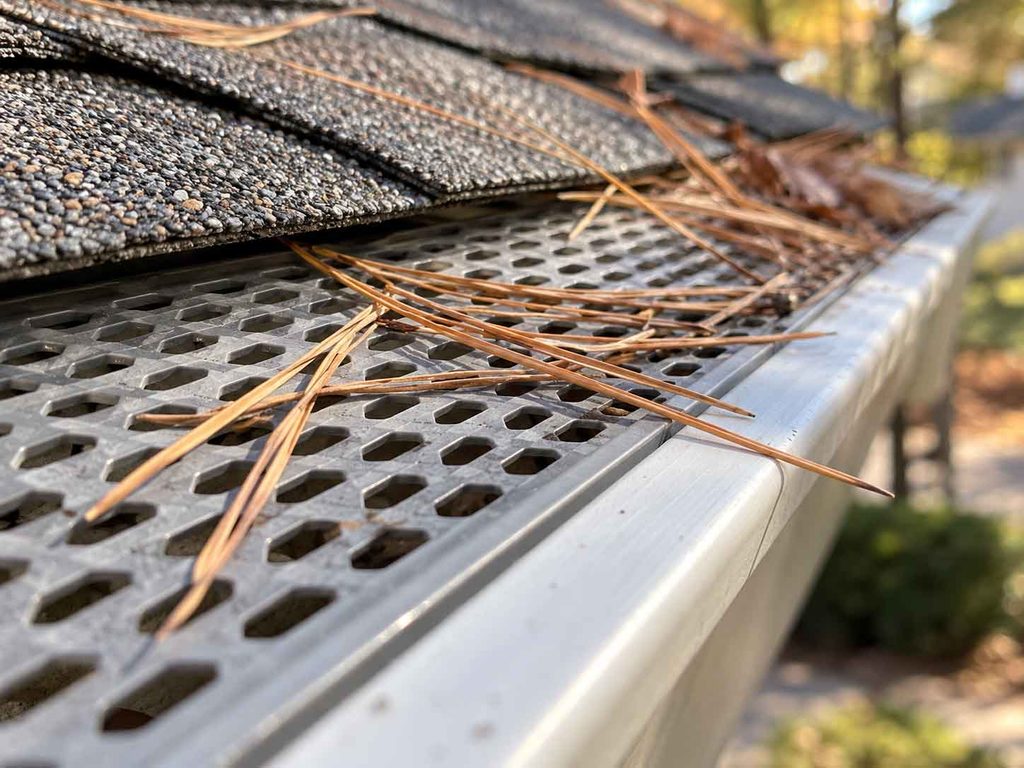
One of the most common reasons for standing water in gutters after rain is an accumulation of leaves, pine needles, dirt, and other debris.
Even a relatively small buildup near a downspout outlet can slow drainage and cause water to collect farther along the gutter.
Common warning signs include:
- Leaves and debris visible along the gutter
- Water collecting near an outlet
- Overflow during rainfall
- Water remaining in a section after runoff ends
Cleaning the gutter and clearing the complete drainage route may resolve the problem without changing its slope.
Palmetto State Gutterman provides professional gutter cleaning and repair services that include removing leaves, debris, and blockages while clearing downspouts.
When cleaning restores proper drainage, additional pitch adjustments may not be necessary.
2. Blocked Gutter Outlets or Downspouts
A gutter may have the correct slope but still experience drainage problems if water cannot pass through its outlet or downspout.
Debris can accumulate at the connection between the gutter and downspout, creating a restriction that causes water to back up.
Signs worth investigating include:
- Little or no water discharging during roof runoff
- Overflow near the downspout connection
- Water collecting at the outlet
- Repeated drainage problems despite surface cleaning
A professional inspection should evaluate the outlet and downspout before concluding that gutter pitch is responsible.
Proper roof drainage matters beyond the gutter itself. The U.S. Department of Energy’s building science guidance explains the importance of directing roof runoff away from a building’s foundation.
Correcting a blockage can help restore water movement through the existing system.
3. Sagging Gutters and Loose Supports
Sagging gutters create localized low spots where rainwater can collect.
This often happens when a gutter section loses support, becomes distorted, or pulls away from its attachment surface.
Possible warning signs include:
- A visible dip along the gutter
- Sections separating from the roof edge
- Loose or damaged supports
- Water repeatedly collecting in one location
- Changes in gutter alignment after storms
A sagging section may require more than simply lifting the gutter.
The attachment points and supporting structure should also be evaluated to determine whether they can securely hold the gutter in its corrected position.
If the fascia or surrounding wood appears deteriorated, that condition may require separate attention before the gutter can be properly supported.
Addressing the underlying problem helps reduce the likelihood of recurring drainage issues.
4. Incorrect Gutter Pitch or Alignment
Incorrect slope becomes a stronger possibility when a clean, otherwise sound gutter continues to trap water.
For example, if a section slopes away from its downspout, water may accumulate at the opposite end rather than reaching the outlet.
Possible indicators include:
- Repeated pooling in the same section
- Water remaining after the gutter and downspout have been cleared
- No obvious debris blocking the drainage route
- Visible alignment problems along the gutter run
A professional can assess whether the gutter has an appropriate slope and determine whether realignment is feasible.
If the gutter is structurally sound, re-pitching may restore proper drainage without requiring complete replacement.
How to Tell If Your Gutters Need Cleaning or Pitch Repair
If you notice standing water in gutters after rain, the next step is determining whether cleaning or repair is the appropriate solution.
The following comparison can help you understand the differences.
| Problem | Possible Cause | Potential Solution |
|---|---|---|
| Water collecting around leaves | Debris buildup | Gutter cleaning |
| Water backing up near an outlet | Blocked downspout | Outlet and downspout clearing |
| Water pooling in a visible dip | Sagging gutter | Support repair or realignment |
| Water trapped in a clean gutter | Incorrect pitch | Professional pitch assessment |
| Water collecting in distorted sections | Gutter damage | Section repair or replacement |
These are possible explanations, not confirmed diagnoses. More than one condition may affect the same gutter system.
For Anderson homeowners, professional assessment can help distinguish a simple maintenance issue from a problem requiring structural repairs.
When Does Standing Water Require Gutter Pitch Repair?
Not every occurrence of standing water in gutters after rain requires pitch adjustment.
A gutter pitch repair is worth considering when:
- The gutter and downspout have been cleared of blockages.
- Water repeatedly accumulates in the same area.
- The existing gutter section is suitable for realignment.
- The gutter slope or localized alignment prevents proper drainage.
- Its supporting components can securely hold the corrected position.
A proper repair assessment should identify where water becomes trapped and whether the existing gutter can be adjusted safely.
If the section is severely distorted, damaged, or inadequately supported, other repairs or replacement may be necessary.
Palmetto State Gutterman offers gutter repair, gutter replacement, and downspout services for residential and commercial properties in Upstate South Carolina.
The most appropriate repair depends on the actual condition of the system.
Should You Repair or Replace Gutters That Hold Water?
Homeowners sometimes assume that persistent standing water means the entire gutter system must be replaced.
Fortunately, that is not always the case.
When Gutter Repair May Be Enough
Cleaning or repair may be appropriate when:
- The gutter material remains in usable condition.
- The problem involves removable debris.
- A downspout blockage can be cleared.
- Loose supports can be corrected.
- A misaligned section can be safely repositioned.
When Gutter Replacement May Be Necessary
Replacement may be worth discussing when:
- A section is severely damaged or distorted.
- The gutter cannot be securely supported.
- Extensive deterioration prevents a lasting repair.
- Existing components cannot provide an appropriate drainage path.
If replacement is recommended, ask why the existing gutter cannot be repaired.
For homeowners considering new gutters, Palmetto State Gutterman offers custom seamless gutter installation with systems fabricated on-site to project specifications.
Seamless gutters can reduce the number of joints along straight gutter runs, but they still require proper slope, clear outlets, secure installation, and regular maintenance.
Why Standing Water in Gutters Should Not Be Ignored
Recurring standing water in gutters after rain can indicate a drainage issue that deserves attention.
When water cannot move through a gutter and downspout properly, potential problems include:
- Water overflowing near siding and exterior walls
- Excessive runoff collecting near the foundation
- Moisture affecting fascia and other nearby materials
- Persistent debris and moisture inside gutters
- Standing-water conditions that may attract pests
The U.S. Environmental Protection Agency recommends keeping gutters clean and unclogged. Its pest prevention guidance identifies standing water and gutter debris as possible sources of moisture for pests.
These risks do not mean every small amount of water will cause property damage. However, repeated pooling is a reasonable reason to inspect the drainage system.
Resolving the underlying cause helps maintain reliable roof runoff management.
How Anderson Homeowners Can Check for Gutter Drainage Problems Safely
You do not need to climb onto your roof to recognize potential drainage problems.
Start with observations from a safe ground-level location.
Check After Rainfall
Notice whether the same section appears to collect water after different storms.
Remember that runoff may continue arriving from the roof after rainfall has stopped.
Look for Visible Sagging
Inspect the gutter line visually for obvious dips, loose sections, or separation from the roof edge.
Observe Downspout Discharge
From a safe location, check whether water appears to discharge during rainfall.
A lack of visible discharge may suggest a blockage, although it does not confirm the cause.
Document Repeated Problems
Photograph visible damage and record where the problem occurs.
If the gutters were recently cleaned, note whether the downspouts were cleared as well.
Avoid climbing onto the roof, leaning ladders against gutter sections, loosening supports, or drilling holes to release trapped water.
These actions can introduce additional hazards or damage without fixing the underlying drainage problem.
How to Prevent Standing Water in Gutters After Rain
Although not every drainage issue can be prevented, routine maintenance helps reduce common causes of standing water.
Consider the following practices:
- Schedule gutter cleaning based on surrounding trees and debris accumulation.
- Keep downspouts and outlets free of obstructions.
- Inspect visible gutter alignment after significant storms.
- Address loose or damaged sections before conditions worsen.
- Ask whether existing gutter supports require repair.
- Recheck drainage if pooling returns after cleaning.
Preventive maintenance is particularly useful for homes surrounded by trees that shed leaves, needles, and other organic material.
If standing water in gutters after rain continues despite cleaning, a professional inspection can help identify whether alignment or structural damage is responsible.
Frequently Asked Questions About Standing Water in Gutters
Is standing water in gutters after rain normal?
A wet gutter immediately after rainfall is normal, and some runoff may continue arriving after a storm. However, noticeable pooling that repeatedly remains in the same location may indicate a blockage, sagging section, or slope problem.
Can incorrect gutter pitch cause standing water?
Yes. When a gutter slopes away from its downspout or develops a low spot, water may become trapped instead of draining toward the outlet. An inspection can confirm whether the slope needs adjustment.
Will cleaning gutters fix standing water?
Cleaning may solve the problem when debris is restricting water movement. However, cleaning alone will not correct damaged supports or incorrect gutter alignment.
Do seamless gutters need proper pitch?
Yes. Seamless gutters still require an appropriate drainage slope. They can also experience standing water when debris, damage, or sagging interrupts the flow.
Can gutter guards prevent standing water?
Gutter guards may reduce the amount of debris entering a gutter, but they do not correct incorrect pitch, damaged supports, or blocked downspouts. Regular inspection and maintenance remain important.
Does standing water mean I need new gutters?
Not necessarily. Depending on the cause and condition of the system, cleaning, downspout clearing, support repairs, or gutter realignment may be sufficient.
Should I fix standing water in gutters myself?
Ground-level observations can help document the issue, but inspecting internal blockages or adjusting elevated gutter sections can involve fall hazards and risk of damage. Consider professional service when safe access or repair work is required.
Professional Gutter Cleaning and Repair in Anderson, SC
If you continue noticing standing water in gutters after rain, identifying the underlying cause is more useful than immediately replacing the gutter or changing its slope.
Whether the issue involves debris, a blocked downspout, a sagging section, or incorrect pitch, the appropriate solution should be based on the system’s condition.
Palmetto State Gutterman is a family-owned and locally operated gutter service company based in Anderson, SC. The company provides gutter cleaning, repairs, maintenance, replacement, and installation services throughout Upstate South Carolina.
If your gutters are collecting water after storms, request a free gutter service estimate to discuss the condition of your system and determine whether cleaning, repair, or replacement is appropriate.
Keep rainwater moving through your gutter system by addressing drainage problems before they become recurring maintenance concerns.
