
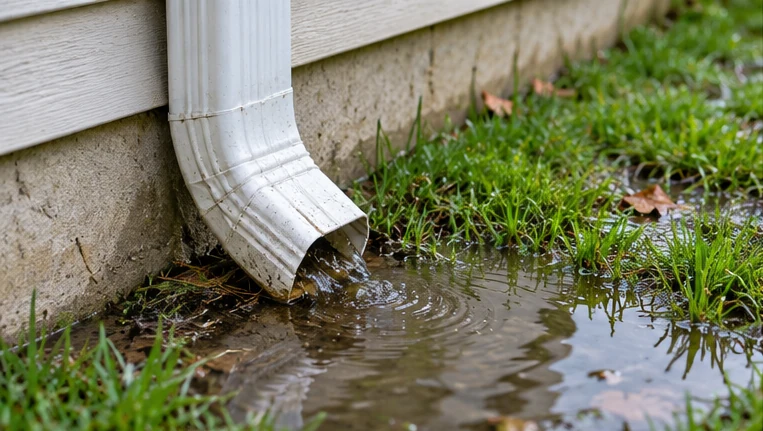
Water pooling at downspout outlets can be frustrating, especially when rainwater collects near your home’s foundation. However, standing water does not automatically mean your gutters need replacing. The problem may involve a clogged downspout, poor outlet placement, damaged components, or inadequate ground drainage.
For homeowners in Anderson, South Carolina, identifying the source of the problem is the first step toward choosing an appropriate solution.
When water collects around a downspout, it is important to understand whether the gutter system is malfunctioning or whether the surrounding landscape is preventing proper drainage.
This guide explains seven practical checks to help you understand why water pooling at downspout outlets occurs, what warning signs to look for, and when professional gutter services may be needed.
Why Water Pooling at Downspout Outlets Happens
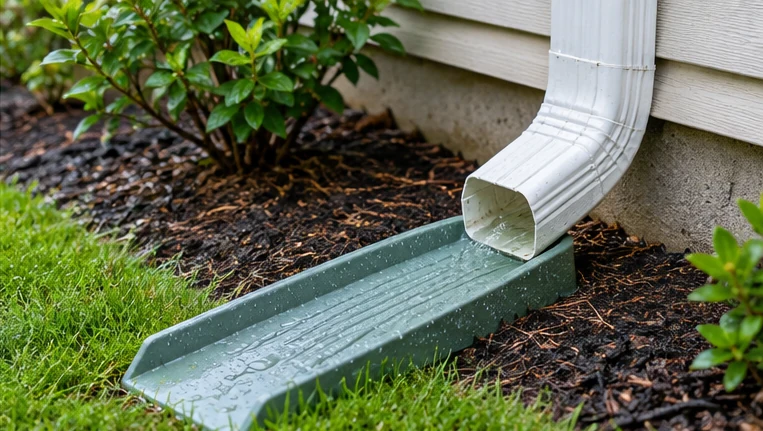
Your gutter system collects rainwater from the roof and directs it through downspouts toward the ground. Ideally, that water continues away from the house without accumulating near the foundation.
However, several conditions can interrupt this process:
- Leaves and debris blocking the downspout
- Damaged or disconnected downspout sections
- Poorly positioned discharge outlets
- Sunken or incorrectly placed splash blocks
- Ground that slopes toward the foundation
- Landscaping that traps runoff
- Blocked or poorly draining underground pipes
Identifying which condition is present can help prevent unnecessary repairs.
Water remaining near the foundation can also increase moisture-related risks. The U.S. Environmental Protection Agency’s guidance on heavy rains recommends maintaining gutters, directing downspouts away from buildings, and correcting drainage problems when rainwater collects beside foundations.
1. Identify Where the Water Is Coming From
The first step when investigating water pooling at downspout outlets is identifying the actual source of the water.
A puddle near a downspout does not always mean the outlet is causing it. Rainwater may also escape from a damaged joint, overflow from the gutter above, or flow into the area from another part of the yard.
During ordinary rainfall, observe the drainage area from a safe, sheltered location.
Look for these signs:
- Water exits the bottom of the downspout: The outlet may be working, but the surrounding ground may not drain properly.
- Water leaks from a connection: A loose or damaged downspout joint may require repair.
- Water spills over the gutter: Debris, improper flow, or gutter damage may be contributing to the problem.
- Water flows toward the puddle from the yard: The issue may involve broader landscape drainage rather than the gutter system alone.
Avoid climbing ladders, handling drainage components, or standing outside during thunderstorms or severe weather.
If possible, record a short video from a safe location. This can help a gutter professional understand how the water behaves during rainfall.
2. Check for a Clogged Downspout Outlet
A clogged outlet is one potential cause of water pooling at downspout outlets.
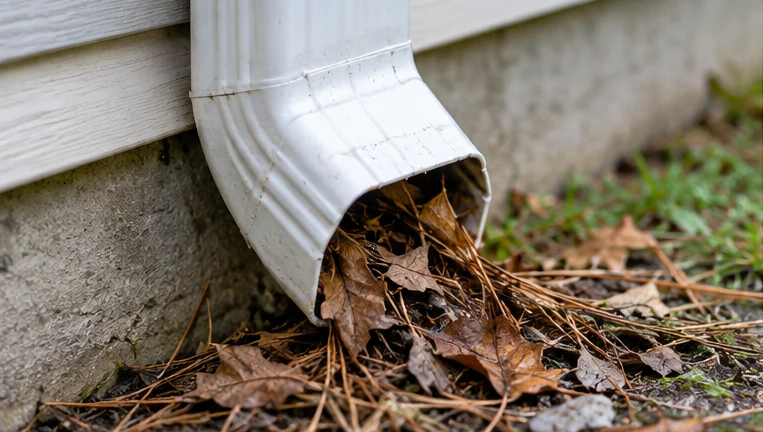
Leaves, twigs, roofing debris, soil, and mulch may accumulate near the bottom opening. These materials can restrict discharge or cause water to back up through the downspout.
After the rain stops, inspect the accessible area around the outlet.
Look for:
- Visible leaves or debris
- Soil or mulch covering the outlet
- Crushed or damaged downspout sections
- Loose or disconnected extensions
- Water marks indicating previous overflow
Remove loose surface debris only when it is safe and accessible. Avoid inserting tools into hidden openings or attempting to force out internal blockages.
A restriction deeper inside the system may require professional attention.
Palmetto State Gutterman provides gutter cleaning and repair services throughout Upstate South Carolina. Its cleaning services include removing accumulated debris and clearing downspouts to help restore proper water flow.
Even after clearing a blockage, check whether the discharged water can travel away from the house.
3. Inspect the Splash Block and Downspout Extension
A splash block or downspout extension helps guide rainwater away from the immediate discharge point.
However, these components are only effective when they direct water toward an appropriate drainage area.
Water pooling at downspout outlets can continue if a splash block has shifted, settled into the soil, or become surrounded by landscaping.
Signs of an ineffective splash block
Check whether the splash block:
- Sits directly beneath the outlet
- Receives the discharged water
- Points away from the building
- Has become tilted or sunken
- Empties into an existing depression
An extension can also cause problems if it has disconnected, become damaged, or ends where water cannot continue draining.
Should you install a longer downspout extension?
A longer extension may be useful when it redirects water to a suitable discharge location.
However, extension length alone does not guarantee better drainage.
For example, moving the outlet farther away may simply create a larger puddle if the extension empties into another low area.
The U.S. Department of Energy provides guidance on gutters, downspouts, and foundation drainage, including methods for directing roof runoff away from buildings.
The appropriate configuration depends on the property, site conditions, and applicable requirements.
4. Examine the Ground Slope Around Your Foundation
Poor ground drainage is another common reason for water collecting beneath downspouts.
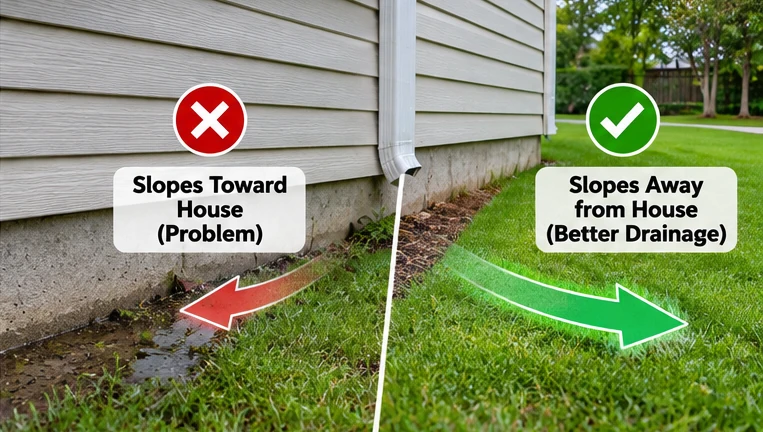
Even a properly functioning gutter system cannot prevent puddles if the surrounding ground directs rainwater back toward the building.
How to recognize a drainage slope problem
After rainfall, look for these conditions:
- Puddles remain near exterior walls
- Water travels toward the foundation
- Soil stays wet longer than nearby areas
- Runoff collects in depressions
- Water follows a channel toward the house
These signs may indicate that the ground slope or surface drainage path needs assessment.
Why proper grading matters
A suitable landscape drainage path allows runoff to move away from the structure rather than remain against it.
If the ground slopes toward the house, installing a new downspout may not solve the underlying issue.
Avoid adding soil or changing the grade without considering existing building details, drainage paths, and neighboring properties.
Persistent pooling caused by grading problems may require evaluation by a qualified drainage professional.
5. Look for Landscaping That Traps Water
Landscaping can improve the appearance of a home, but certain features may unintentionally interfere with rainwater drainage.
Raised garden borders, decorative edging, compacted soil, and accumulated mulch can prevent runoff from moving freely across the yard.
This may contribute to water pooling at downspout outlets even when the outlet itself is clear.
Landscaping problems to check
Inspect the area for:
- Raised edging surrounding the discharge point
- Mulch blocking the water’s path
- Soil buildup near the downspout
- Depressions created by erosion or settling
- Planting beds that retain runoff
Look for washed-out mulch and shallow channels in the soil. These can reveal where water travels during rainfall.
Small, accessible surface obstructions may be straightforward to identify, but significant grading changes require careful planning.
Do not redirect water onto neighboring properties, sidewalks, driveways, or other areas where it could create hazards.
6. Check for Underground Downspout Drainage Problems
Some homes have downspouts connected to underground drainage pipes.
These systems may move roof runoff away from the visible outlet, but the buried pipe’s condition and discharge location are not always obvious.
Water pooling at downspout outlets connected to underground drains may indicate a restriction, damaged connection, inadequate drainage capacity, or another drainage problem.
Warning signs of underground drainage trouble
Look for:
- Water backing up around the pipe connection
- Water surfacing near the buried drainage route
- Repeated pooling after ordinary rainfall
- Unusually wet or settled ground
- Water emerging from an unexpected location
If the underground discharge outlet is visible and safely accessible, observe whether water appears to leave it during rainfall.
Never excavate unknown underground lines or force equipment into a buried drainage system without understanding its configuration.
An underground drainage problem may require a specialized drainage contractor.
Palmetto State Gutterman offers gutter cleaning, repairs, and downspout installation. Homeowners should confirm the scope of any underground drainage work separately rather than assuming it is included in standard gutter services.
7. Determine Whether Your Gutters Need Cleaning, Repair, or Replacement
Once you identify the likely source of water pooling at downspout outlets, the next step is determining what type of work may be appropriate.
Not every drainage problem requires a complete gutter replacement.
When gutter cleaning may help
Cleaning may be appropriate when:
- Leaves and debris restrict water flow
- Downspouts contain visible blockages
- Gutters overflow because of accumulated material
- Routine maintenance has been neglected
Removing debris may restore proper drainage through the gutter system.
When downspout repairs may be needed
Repairs may be worth considering when:
- Joints leak or disconnect
- Downspout sections are crushed or damaged
- Existing extensions no longer direct water properly
- Components are loose or poorly aligned
A localized repair may address the visible problem without requiring an entirely new gutter system.
When downspout installation may be appropriate
If an existing downspout repeatedly discharges water into an unsuitable area, a different configuration may help improve runoff management.
Palmetto State Gutterman offers professional gutter and downspout installation, including seamless systems custom-made on-site to customer specifications.
The correct approach should consider both the gutter components and where water travels after leaving the outlet.
When a drainage specialist may be necessary
If the downspout flows normally but the surrounding ground remains saturated, the problem may extend beyond the gutter system.
A qualified drainage professional may need to assess grading, surface runoff, or underground drainage conditions.
Water entering the home, persistent wetness against the foundation, or repeated erosion should receive prompt attention.
How to Help Prevent Water Pooling at Downspout Outlets
Although some drainage problems require professional assessment, routine inspections can help homeowners recognize developing issues.
Consider these preventive steps:
- Inspect gutters regularly. Look for accumulated debris, visible damage, and overflowing sections.
- Check accessible downspout outlets. Keep surface debris from blocking the discharge area.
- Review splash block positioning. Confirm that the block receives water and points toward a suitable drainage path.
- Observe drainage after rainfall. Note where puddles form and whether water moves toward the building.
- Inspect visible connections. Look for loose, damaged, or disconnected components.
- Monitor landscaping changes. Soil movement, mulch buildup, and garden edging can alter drainage routes.
- Arrange professional inspections when needed. Persistent or unexplained pooling deserves further evaluation.
Preventive maintenance does not eliminate every drainage issue, but it can help identify gutter-related problems before they become more difficult to manage.
Frequently Asked Questions About Downspout Drainage
Why is water pooling at downspout outlets even when my gutters are clean?
Clean gutters can still discharge into poorly draining ground. The outlet may be positioned near a depression, the landscape may slope toward the foundation, or another obstruction may prevent runoff from moving away.
Can a clogged downspout cause water to pool near my house?
Yes. Debris can restrict downspout flow, causing water to back up or escape through other parts of the gutter system. However, pooling alone does not confirm a blockage.
Will gutter guards prevent water from pooling?
Not necessarily. Gutter guards can help reduce certain types of debris entering the gutter system, but they do not correct poor grading, damaged outlets, or unsuitable discharge locations. Regular maintenance may still be necessary.
Is a splash block enough to solve the problem?
A correctly positioned splash block may help guide runoff away from the downspout. However, it will not correct larger drainage problems if water continues into a low area or flows back toward the home.
Should I replace my gutters if water collects around the foundation?
Not automatically. First determine whether the issue involves clogged gutters, leaking joints, downspout placement, or ground drainage. Replacing functional gutters may not resolve poor drainage conditions.
When should I call a professional about downspout pooling?
Consider professional assistance when water repeatedly collects near the foundation, gutters overflow, connections are damaged, or the source of the problem remains unclear. Water entering the building warrants prompt assessment.
Get Professional Gutter and Downspout Help in Anderson, SC
Water pooling at downspout outlets should not be ignored, especially when runoff repeatedly collects near your home’s foundation.
The right solution begins with understanding where the water comes from, whether the gutter system is functioning properly, and where the water travels after discharge.
For homeowners in Anderson and surrounding Upstate South Carolina communities, Palmetto State Gutterman provides professional gutter cleaning, repairs, maintenance, and downspout installation.
Before requesting service, consider taking photos of the affected outlet, documenting any visible leaks, and noting how long the puddle remains after rain.
These observations can help make the initial inspection more productive.
Need help with your gutter or downspout system?
Request a Free Estimate from Palmetto State Gutterman to discuss your gutter or downspout concerns and determine which services may be appropriate for your home.
